
Britain’s welfare argument has stopped being about benefit rates. It is now about what the state can afford, who pays, and how united the country remains. Here is what has actually become law, what is still only proposed, and five evidence-based views on where this ends.
UK Benefits Reform: My 5 Honest Views on What Is Really Happening
Ask most people what UK benefits reform means and they say cuts. That is half right, which makes it misleading.
What has actually become law is narrower than the headlines suggested. The Universal Credit health element was cut sharply for new claimants from 6 April 2026. The basic allowance rose above inflation. The two child limit went. The PIP cut that nearly broke the Labour Party in 2025 was abandoned before it reached the statute book, and PIP now sits inside a review told to stay within existing spending projections.
So is Britain redesigning an unsustainable system, controlling expenditure, or both? My answer, evidenced below, is that it is attempting both and has achieved neither cleanly. The savings are tiny. The redesign is real but unfinished and repeatedly overtaken by politics.
Five evidence based views follow, then the wider consequences.
What Is Actually Changing With UK Benefits?
The Universal Credit Act 2025 is the legislation that matters. On 1 July 2025 the government removed the proposed PIP four point rule entirely. Per the Child Poverty Action Group, no changes to PIP descriptors will happen until the Timms Review concludes. Anything telling you a four point rule starts in November 2026 is quoting a withdrawn proposal.
| Reform | Position | Who | When | Status |
|---|---|---|---|---|
| UC health element cut | £217.26 a month, about half the protected rate | Most new LCWRA claimants | April 2026 | Confirmed |
| Standard allowance raised | £424.90 single 25+ | All UC households except protected rate | April 2026 | Confirmed |
| Two child limit | Abolished | Families with 3+ children | April 2026 | Confirmed |
| Trying work | No longer triggers reassessment | PIP and UC health claimants | April 2026 | Confirmed |
| PIP four point rule | Withdrawn | Nobody | July 2025 | Withdrawn |
| PIP assessment redesign | Timms Review reporting | Future claimants | Autumn 2026 | Proposed |
| WCA abolition | Announced | UC health claimants | 2028/29 | Proposed |
Terminally ill claimants and those meeting severe conditions criteria keep the higher rate. Most benefits rose 3.8 percent, the state pension 4.8 percent.
1. The System Needs Reform, but Not Every Reform Is Good
The Timms Review interim report, published 9 July 2026, drew over 38,000 responses. Around 90 percent viewed the PIP assessment negatively. The review concluded the benefit is no longer fit for purpose. That is a government review about a government benefit.
The Milburn review of young people and work found only around one in five NEET young people in England receive meaningful employment support. Nearly 60 percent are economically inactive rather than unemployed.
But the law that passed fixed none of that. It did not improve assessments, cut waiting times or expand support. It reduced a payment. The review addressing the assessment was only commissioned in October 2025, after the government lost control of its backbenches.
My view: the diagnosis is sound and largely cross party. The prescription addressed a different problem. Totally different Problem.
2. This Is About the Bill as Much as About Work
Total UK welfare spending was roughly £334bn in 2025/26, forecast to reach £409bn by 2030/31. The DWP puts spending on disabled people and people with health conditions at £77.1 bn in 2025 to 2026. The OBR expects disability caseloads to rise from 6.5 million to 8.8 million by 2030/31.
The pressure is real. National debt stood at £2,985bn in July 2026, 94.1 percent of GDP, with £109bn of annual debt interest.
And yet. The Commons Library reports that over the five years to 2029/30 the Universal Credit rebalancing is not expected to save money at all. The net annual saving in 2029/30 is £210 million. That is the fiscal yield of the most damaging welfare fight of the parliament.
The OBR also said it could not assess whether the cuts would increase employment, citing insufficient information from government. And the Timms Review’s own September 2026 update confirms it must remain within OBR projections for future PIP expenditure. The review may redesign the benefit. It may not cost more.
My view: expenditure control set the boundaries and the employment argument was fitted inside them.

3. Disabled and Long Term Ill People Have Most Reason to Worry
The March 2025 impact assessment of the original package estimated 250,000 more people in relative poverty by 2029/30, including 50,000 children, with 3.2 million families losing an average £1,720 a year, 96 percent of them households containing disability.
After the PIP measures were dropped, the DWP republished its modelling in July 2025. It now estimates 50,000 fewer individuals in relative poverty after housing costs in 2029/30. Both figures are official. They model different packages, and the second excludes employment effects.
The real distinction is between someone who could work with proper adjustments and someone whose condition makes sustained work impossible. The architecture increasingly recognises this, through severe conditions criteria and a proposed fast track pathway. But recognition in a review is not protection in law.
My view: protections at the severe end look reasonably robust. Risk concentrates on contested and fluctuating conditions, particularly mental health, which is where caseload growth has been fastest.
4. “Getting People Back to Work” Is Harder Than It Sounds
In April to June 2026 unemployment was 4.9 percent, 1.77 million people, up 88,000 on the year. Economic inactivity was 9.11 million, 20.9 percent. Vacancies fell to 707,000, below pre pandemic levels, with 2.5 unemployed people per vacancy, the highest since mid pandemic. Youth unemployment was 16.2 percent. NEET numbers peaked at 1,012,000 in early 2026, the highest in twelve years.
Demand is soft precisely as policy tries to expand supply.
The right question is not whether someone finds a job but whether they hold it twelve months later. That needs health treatment in weeks not years, employers who will not quietly manage someone out during a relapse, transport, and a benefit system that forgives a failed attempt.
There is £1bn a year for employment support by 2029/30, with £300m brought forward. But the cut started in April 2026 and the support arrives later. Milburn himself told the Financial Times that fixing the NEET problem costs money upfront and takes years.
My view: the employment case is genuine, the arithmetic was never demonstrated, and the sequencing is backwards.
5. Judge It Afterwards, on Measured Outcomes
Not on Treasury forecasts or opposition projections. I would publish annually: flows into work against a control group, retention at six and twelve months, the disability employment gap, poverty among households with a disabled member, tribunal outcomes versus initial decisions, waiting times, homelessness and food bank demand, and whether reduced UC spending simply migrated into higher PIP claims. The DWP’s own assessment expected 50,000 extra PIP claimants by 2029/30 in response to the lower health element.
If the disability employment gap narrows and poverty does not widen, the government was right. If neither happens, no language about dignity rescues it.
What the Government Says
A bill heading for £409bn alongside £109bn of debt interest, defence commitments and an ageing population is not sustainable when three taxes raising 65 percent of revenue are ruled out. The current system fails people, supporting one NEET young person in five. Existing claimants are protected, trying work no longer risks an award, and abolishing the two child limit is projected to lift around 550,000 children out of poverty by 2030. Prime Minister Andy Burnham, in office since 20 July 2026, promises a fair and sustainable way to bring the bill down.
What Critics Say
Disability organizations say a payment was cut while the documented assessment failures remain untouched until 2028 at the earliest. Economists note the OBR could not score employment effects and the saving is £210m. Labour backbenchers see a self inflicted wound producing a rounding error. The Conservatives have identified £47bn of savings, around £23bn from welfare, and Reform UK’s August 2026 document claims £50bn a year, figures the IFS has scrutinized. The Social Security Advisory Committee flagged the unresolved tension between supporting disabled people and reducing caseloads.
Broadly: existing claimants and larger families gain, new health element claimants lose, taxpayers gain little in this decade, and outcomes for people expected to move into work remain genuinely uncertain.
The Bigger Question: What Is Happening to the United Kingdom?
Benefits reform is not breaking up Britain. But it exposes a state with commitments it cannot obviously fund, a tax take heading for 38.5 percent of GDP by 2030/31, and no agreement on who adjusts.
Those pressures surface elsewhere. On 7 May 2026 Scotland returned 57 SNP MSPs, with Labour and Reform UK tied on 17, producing a pro independence majority of 73 with the Greens. Wales elected Plaid Cymru as the largest party on 43 seats, Reform UK second on 34, and Labour reduced to nine, ending 27 years in power. Rhun ap Howarth became First Minister on 12 May 2026.
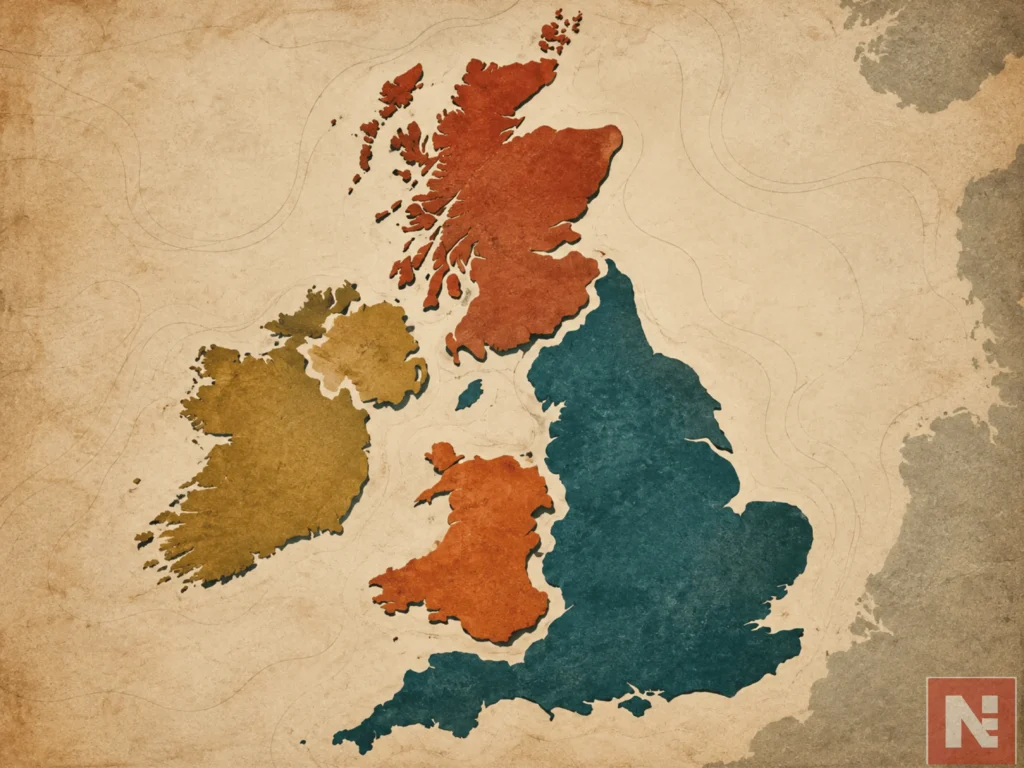
Could the Nations Survive Outside the UK?
Scotland could function as a state. Whether Scots would be richer initially is separate. GERS for 2025/26 shows a notional deficit of £25.3bn, 10.9 percent of GDP against 4.2 percent for the UK. Revenue per person was £17,718, almost identical to the UK’s £17,720. Spending per person was £22,281 against £19,561. The gap is spending, not weakness.
Wales faces a harder adjustment. The IFS put its 2024/25 deficit at £7,149 per person against Scotland’s £4,662, and the Welsh gap is driven by lower revenue, meaning a weaker tax base.
Northern Ireland’s alternative is reunification, not independence. Its deficit was £8,216 per person. Credible estimates of the annual cost to Dublin range from around £3bn to around £11bn, and economists disagree sharply.
England would not be a bystander. Nearly £3tn of debt would need apportioning, and the nuclear deterrent sits on the Clyde with no obvious alternative site.
Would successor states be independent, or smaller and more dependent? Predominantly the latter, at least for a generation. That is not an argument against independence. Ireland made that trade. It is an argument against pretending the trade does not exist.
Does Banning Israeli Settlement Goods Affect Britain?
On 8 September 2026 Foreign Secretary Ed Miliband announced that the UK now considers the occupation itself unlawful. with an import ban on goods from illegal settlements, restrictions on related services, an advertising ban and tighter arms licensing. Legislation is planned within six to nine months, applied geographically by postcode declarations.
Settlement goods and Israeli goods are same thing BUT Miliband confirmed the ban will not hit green line Israel.
UK trade with the Occupied Palestinian Territories was around £38m in 2025 against roughly £6bn of UK Israel trade. Alternative suppliers exist for everything involved. Enforcement is the genuine difficulty, since the territories sit in a customs union with Israel.
Israel’s response was diplomatic and economic: closing the British consulate in Jerusalem, removing UK representatives from the Gaza coordination center, ending UK training of Palestinian Authority police, and barring eleven MPs. It actually touched trade, investment or technology cooperation.
Britain will not feel this economically. Its effect is legal and diplomatic, and the costs have already been paid.
What Did Trump’s Last UK Visit Really Deliver?
The most recent visit to Ireland sparked all hidden debates. The MPs in the right of separation took it as a sign and started to spark the debate among other MPs as well as with parliament members.
Is the Nationalist Right Really Growing?
Precision matters. Civic British nationalism, English nationalism, populist right politics, Reform UK voters and explicit white nationalists are not the same thing.
The first Unite the Kingdom rally in September 2025 drew well over 100,000, far beyond anything the EDL achieved. But the second, in May 2026, was roughly half the size. HOPE not hate tracked 251 anti migrant protests in 2025 and warns the far right is bolder and more extreme.
Explicitly white nationalist organizations remain small and often proscribed. Their ideas travel further than their membership, which is the gap worth watching.
Electorally, mid September 2026 polling shows Labour and Reform level around 23 to 25 percent, with the Conservatives near 20. Reform now holds 17 MSPs and 34 Senedd members.
Trump has changed British campaigning technique substantially and British politics somewhat. He did not create it. Brexit preceded him.
And here is the connection. When Westminster politics becomes more English in its preoccupations, it gives voters elsewhere a reason to look for alternatives. May 2026 delivered exactly that. Competing nationalisms feed one another.
My Overall View
Britain can protect those unable to work and help those who can. The Timms recommendations show how. It cannot also hold welfare flat while caseloads rise by 2.3 million without touching the triple lock and the tax base, which is where the growth actually sits.
What strikes me most is the mismatch of scale. An argument that consumed a government’s authority has so far produced £210m in year five. That is not a story about welfare. It is a story about a political system that can no longer settle large questions and therefore fights very hard over small ones.
So: is Britain simply reforming its benefits system, or are we watching a much larger argument about what kind of country Britain is going to become?
What Happens Next
15 September 2026: Timms Review workshops begin.
28 October 2026: Budget, delivered by Chancellor John Healey.
Autumn 2026: Timms Review final report; government report on young people and work.
Within six to nine months of 8 September 2026: settlement goods legislation.
2027/28: proposed restriction of the UC health element to over 22s.
2028/29: proposed abolition of the Work Capability Assessment.
By 2029: next UK general election due.
FAQ
What is changing with UK benefits in 2026?
The UC health element fell to £217.26 a month for most new claimants. The standard allowance rose above inflation to £424.90 for single claimants aged 25 and over. The two child limit was abolished and Statutory Sick Pay waiting days removed.
Are PIP payments being cut?
No. The four point rule was removed from the legislation in July 2025. No eligibility changes will happen until the Timms Review reports and further legislation follows.
Will existing claimants be affected?
Those assessed before 6 April 2026 keep the protected rate, around 2.17 million people by 2029/30. Trying work no longer triggers a review.
How much does Britain spend on benefits?
Around £334bn in 2025/26, forecast to reach £409bn by 2030/31. Disability and health related support was £77.1bn in 2025 to 2026.
How much will the reforms save?
Little. The Commons Library reports no saving across five years to 2029/30, with a net £210 million in 2029/30 alone.
Could Scotland survive economically outside the UK?
It could function. GERS 2025/26 shows a 10.9 percent deficit against 4.2 percent for the UK, driven by higher spending per person rather than weaker revenue.
Would banning Israeli settlement goods hurt Britain?
No. Trade with the Occupied Palestinian Territories was about £38m against £6bn of UK Israel trade. The consequences are diplomatic.
What happens economically if the UK breaks up?
Every part adjusts. Deficits per person in 2024/25 were £8,216 in Northern Ireland, £7,149 in Wales and £4,662 in Scotland, while a continuing UK would face debt apportionment and relocating the deterrent


The conversation